A secondary ingredient, explained
Alpha-Ketoglutarate Explained: The Chemistry Behind VapoCept's “AKG 2:1” Line
Alpha-ketoglutarate, or AKG, is a small molecule the body's own cells already make and use for energy production. VapoCept pairs it with arginine in a 2:1 salt, meaning two arginine molecules to one AKG molecule. Working out the actual molecular weights shows why 200 mg of that combined salt yields roughly 140 mg of arginine, matching the figure the brand's own panel implies. No clinical study of VapoCept's specific formula or ratio is published.
What is alpha-ketoglutarate, in plain terms?
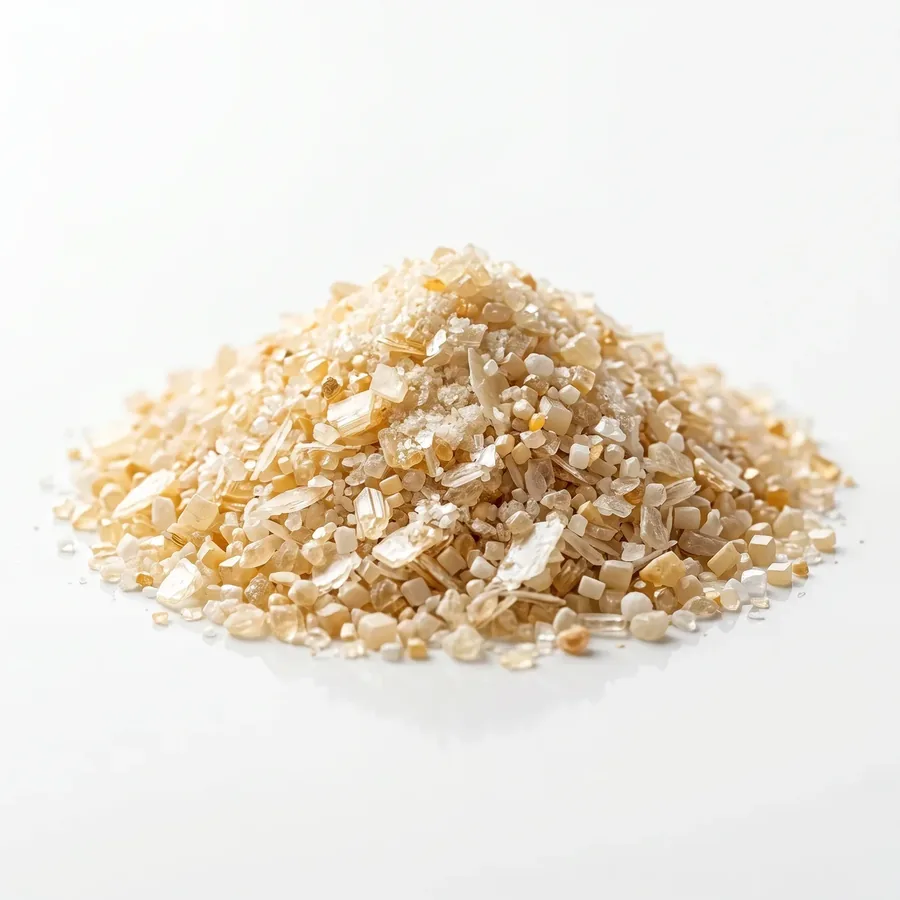
Alpha-ketoglutarate, also written as 2-oxoglutarate and abbreviated AKG, is not an exotic additive. It is one of the intermediate compounds in the citric acid cycle, the core chemical loop every cell in the body runs to turn food into usable energy. Your own cells make and consume AKG constantly as part of ordinary metabolism, independent of anything in a supplement.
As a supplement ingredient, AKG is usually sold bound to an amino acid, forming a salt. VapoCept's panel lists "L-Arginine AKG 2:1 Extract," which pairs the amino acid arginine with AKG in a defined ratio. The "2:1" describes that ratio: two arginine molecules for every one AKG molecule in the salt.
Why pair an amino acid with AKG at all?
The formulation idea behind pairing an amino acid with AKG did not originate with sports or focus capsules. It comes from clinical nutrition research on a related compound, ornithine alpha-ketoglutarate (OKG), studied for decades in people recovering from severe illness, surgery, or burns, where the body's protein and energy needs are unusually high.
A 2004 review in The Journal of Nutrition describes ornithine alpha-ketoglutarate as "a potent precursor of arginine and nitric oxide," laying out the biochemical argument that AKG can help support the metabolic pathway that produces arginine and, downstream, nitric oxide, in part by supplying both a nitrogen-handling amino acid and a citric-acid-cycle intermediate at the same time (Cynober, 2004). That review focuses on ornithine-AKG, a different parent amino acid than the arginine-AKG salt VapoCept lists, and on clinical nutrition settings such as critical care and would recovery, not on a dietary supplement capsule taken by a healthy adult for focus or energy. It is useful background on why formulators reach for AKG at all. It is not evidence for VapoCept's product.
The molecular-weight math behind "roughly 140 mg"
Both VapoCept's own ingredients page and its supplement facts page state that the 200 mg AKG 2:1 line contributes "roughly 140 mg" of arginine. That figure is not a rounded guess; it falls directly out of the molecular weights of the two building blocks, and working through it shows exactly where the number comes from.
Start with the molecular weights
L-arginine (the free amino acid) has a molecular weight of about 174.2 g/mol. Alpha-ketoglutaric acid has a molecular weight of about 146.1 g/mol. These are fixed chemistry constants, not brand-specific figures.
Build the 2:1 salt's total weight
A 2:1 arginine-AKG salt combines two arginine molecules with one AKG molecule: (2 × 174.2) + 146.1 = 348.4 + 146.1 = 494.5 g/mol for the whole salt.
Find arginine's share of that weight
Arginine's two molecules weigh 348.4 out of the salt's total 494.5, which is 348.4 ÷ 494.5 ≈ 70.4% of the salt's weight.
Apply that share to 200 mg
200 mg × 70.4% ≈ 141 mg of arginine, with the remaining roughly 59 mg being the AKG portion of the molecule.
| Component | Molecular weight | Share of the 2:1 salt | Amount in 200 mg of the salt |
|---|---|---|---|
| Arginine (×2) | 2 × 174.2 = 348.4 g/mol | About 70.4% | About 141 mg |
| Alpha-ketoglutarate (×1) | 146.1 g/mol | About 29.6% | About 59 mg |
| Total salt | 494.5 g/mol | 100% | 200 mg |
This is why the arginine figure quoted elsewhere on the VapoCept site, "roughly 140 mg" from the AKG line, checks out against the underlying chemistry rather than being an arbitrary estimate. Added to the separate 200 mg "L-Arginine (base)" line on the same panel, total arginine per capsule comes to about 341 mg, which rounds to the "about 340 mg" figure used elsewhere on the site.
For readers who want to check this math independently, the molecular weight figures above come from each compound's own chemical identity, not from anything brand-specific: L-arginine is catalogued in PubChem under compound ID 6322, and alpha-ketoglutaric acid under compound ID 51, each with its molecular weight listed. The "2:1" ratio itself is also not unique to VapoCept; it is the most common commercial ratio sold industry-wide as "AAKG," though some suppliers sell a 1:1 arginine-to-AKG ratio instead, which would change this exact math. The published panel names VapoCept's ratio as 2:1, which is the ratio this page's calculation uses throughout.
What AKG is not
AKG is not a stimulant, and nothing in its chemistry suggests a fast-acting or dramatic effect. It is not evidence, on its own, that an arginine-AKG product is more potent or better absorbed than plain arginine; the OKG research describing a possible "arginine-sparing" effect was conducted with a different parent amino acid, in clinical populations, at doses far above a single capsule's content. And it is not something VapoCept's own formula has been clinically tested with: no published trial examines this exact 2:1 arginine-AKG ingredient at VapoCept's 200 mg dose, for any outcome, cognitive or otherwise.
A study that did test arginine alpha-ketoglutarate directly, rather than the related ornithine-AKG compound, looked at exercise performance rather than cognition. Published in the Journal of the International Society of Sports Nutrition, it gave resistance-trained and untrained men a single 3,000 mg dose of AAKG 45 minutes before testing bench press and leg press strength, and found "no ergogenic benefit" on one-repetition maximum or total load volume, regardless of training status (Wax et al., 2012). That 3,000 mg dose is fifteen times VapoCept's entire 200 mg AKG 2:1 line, tested for strength, not memory or focus, and still came back negative. It is a second, independent data point that AAKG as an ingredient category has not reliably demonstrated the kind of effect a marketing claim might imply, at doses well above what one VapoCept capsule provides.
Why do amino acids get bonded to other molecules at all?
VapoCept's panel actually contains three examples of this same general idea: arginine bonded to AKG, citrulline bonded to hydrochloride, and citrulline bonded to malic acid. In each case, a supplement maker takes a plain amino acid and pairs it with a second small molecule, called a salt-forming partner, before turning it into a capsule ingredient.
Manufacturers do this for a mix of practical and marketing reasons that vary by pairing. Some salt forms are simply easier to manufacture into a stable powder than the free amino acid. Some are chosen because the partner molecule is cheap and shelf-stable. And some, including the AKG and malate pairings, are chosen because the partner molecule has its own role in the body's energy metabolism, giving a marketing department a second ingredient story to tell even when the clinical evidence for the pairing itself, at supplement doses, is thin.
Arginine AKG
Arginine paired with a citric-acid-cycle intermediate. About 70.4% of this salt's weight is arginine.
Citrulline malate
Citrulline paired with malic acid, another citric-acid-cycle intermediate, common in sports powders, and listed separately on VapoCept's own panel.
None of this is specific to VapoCept or unusual for the category. It does mean that a label listing several "named" amino acid forms is not automatically listing several different active ingredients with independent effects; several of VapoCept's seven lines are variations on the same two underlying amino acids, arginine and citrulline, dressed in different salt-forming partners.
Where else does AKG show up in nutrition research?
Beyond the clinical-nutrition literature on ornithine-AKG, alpha-ketoglutarate salts of various amino acids are common in sports nutrition products marketed for exercise performance and recovery, where manufacturers often cite the same underlying citric-acid-cycle logic. A separate 2007 review in The Journal of Nutrition on the pharmacokinetics of arginine and related amino acids covers how differently-formed arginine compounds are absorbed and metabolized, underscoring that the delivery form of an amino acid can change its handling in the body even when the headline amino acid is the same (Cynober, 2007).
For VapoCept specifically, the practical summary is this: AKG is a real, well-characterized molecule with a plausible biochemical rationale for pairing with an amino acid, borrowed from a related clinical-nutrition ingredient. The 200 mg of "L-Arginine AKG 2:1" on the panel genuinely works out to about 141 mg of arginine by the chemistry, which is useful if you are trying to total your arginine intake, as the seven amounts vs research post does. What the panel and the published science do not provide is a study of VapoCept's capsule itself, so treat the AKG line as a chemistry fact you can verify, not as a tested performance claim. If you want to run the molecular-weight math yourself on a different ratio or a different amino acid pairing elsewhere on the panel, the same four-step method in the table above applies: look up each component's molecular weight, build the combined salt's total weight, find each component's share, then apply that share to the milligram amount printed on the label. The same method works on the citrulline malate line elsewhere on the panel, or on any other amino-acid salt you come across on a different brand's label entirely, which makes it a durable habit for reading any supplement panel, not a one-time trick specific to this page, on VapoCept's bottle or on anyone else's. It turns a label line that looks like marketing shorthand into a number you checked yourself.
Questions people ask about this
What is alpha-ketoglutarate?
A small molecule, also called 2-oxoglutarate or AKG, that is a normal part of the citric acid cycle your cells already run to produce energy. It is not an exotic or synthetic additive.
Why does VapoCept pair arginine with AKG instead of using plain arginine?
The formulation idea is borrowed from research on a related compound, ornithine alpha-ketoglutarate, studied in clinical nutrition as a possible way to support arginine and nitric oxide production. No published study tests VapoCept's specific arginine-AKG salt.
How is “roughly 140 mg of arginine” calculated from 200 mg of the AKG line?
By molecular weight. Two arginine molecules (348.4 g/mol) make up about 70.4% of the 2:1 salt's total weight (494.5 g/mol), so 200 mg of the salt yields about 141 mg of arginine and about 59 mg of AKG.
Is arginine-AKG proven to work better than plain arginine?
Not on the published evidence. The arginine-sparing research concerns a different parent compound, ornithine-AKG, used in clinical settings at much higher doses than a single capsule.
Does AKG itself have a daily recommended amount?
No. Alpha-ketoglutarate is not a vitamin or mineral with an established Recommended Dietary Allowance; it is an intermediate compound your body already produces internally.
Has arginine alpha-ketoglutarate itself been tested in a study?
Yes, for exercise strength, not cognition. A 2012 study gave men a single 3,000 mg dose, fifteen times VapoCept's 200 mg line, and found no improvement in bench press or leg press performance.
Sources for this page
- Cynober L. Ornithine alpha-ketoglutarate as a potent precursor of arginine and nitric oxide: a new job for an old friend. J Nutr. 2004 Oct;134(10 Suppl):2858S-2862S. Source
- Cynober L. Pharmacokinetics of arginine and related amino acids. J Nutr. 2007 Jun;137(6 Suppl 2):1646S-1649S. Source
- Wax B, Kavazis AN, Webb HE, Brown SP. Acute l-arginine alpha ketoglutarate supplementation fails to improve muscular performance in resistance trained and untrained men. J Int Soc Sports Nutr. 2012 Apr 17;9(1):17. Source
Keep reading
Ready when you are
Order VapoCept from the authorized US retailer
30 capsules in every bottle, 1 capsule a day. 60-day money-back guarantee. The order desk, listed at the foot of the page, handles tracking and refunds.
Review record
The people behind this VapoCept page
- Writer
- VapoCept Editorial Desk
- Reviewer
- Dr. Patricia McKeon, neuropsychologist
- Last revised
The desk wrote this page for Vapozcept from the label, the published panel and public health sources, and Dr. Patricia McKeon reviewed it before it went live. It is general information for adults, not advice about your own health.
Worried about your memory or focus, or taking blood-pressure or heart medicine? See your doctor before you start VapoCept, and bring the bottle.