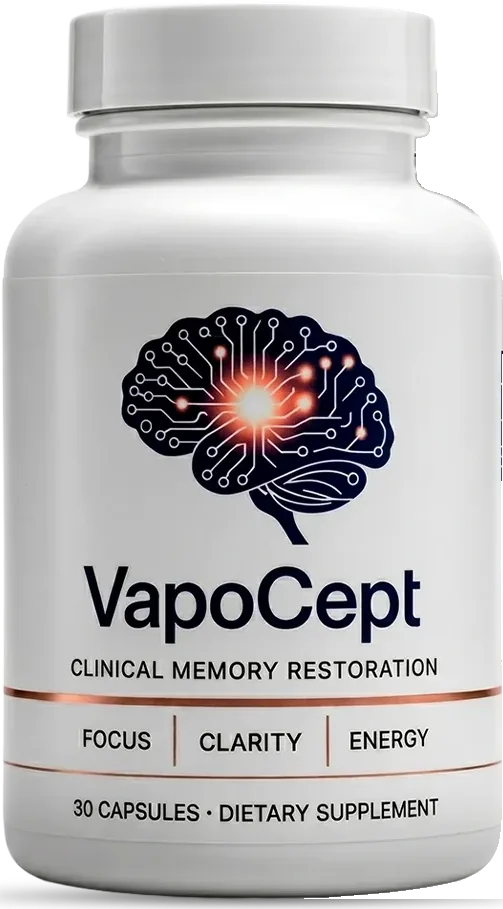
Reading the badges, not just seeing them
What VapoCept's Bottle Seals Actually Certify, and What They Don't
VapoCept's pages display several seals: an FDA-registered facility roundel, a GMP seal, a Made in USA star, a non-GMO seal, a gluten-free seal, a dairy-free seal, a vegetarian seal, and others. Some of these point to specific, enforceable federal standards. Others are marketing claims with no single legal definition. Here is what each one is actually required to mean, and what it is not.
Why this page exists
VapoCept's pages carry a row of small circular badges: an FDA-registered facility roundel, a GMP seal, a manufactured-in-USA star, a money-back guarantee seal, a non-GMO seal, a gluten-free seal, a dairy-free seal, a vegetarian seal, a "natural ingredients" leaf, a "guaranteed pure" roundel, and a doctor-formulated stethoscope seal. Seals like these are common across the supplement industry, and shoppers tend to read a row of badges as one undifferentiated signal of trustworthiness.
That is not how these marks actually work. Some point to a specific, legally enforceable federal standard that a company can be held to. Others are marketing language with no single legal definition at all, meaning two different companies' "natural" or "pure" claims are not necessarily measured against the same bar. Reading the row accurately means treating each badge on its own terms.
What "FDA-registered facility" means, and does not mean
Under the Federal Food, Drug, and Cosmetic Act, facilities that manufacture, process, pack, or hold food, including dietary supplements, for consumption in the United States generally must register with the FDA. Registration is primarily a food-safety and traceability tool: it gives the FDA a list of facilities it can inspect and contact in the event of a recall or contamination issue.
What registration does not mean is that the FDA reviewed, tested, or approved VapoCept the product before it went on sale. The FDA does not pre-approve dietary supplements for safety or effectiveness the way it approves prescription drugs. A company registering its facility is a separate, administrative step from the government vouching for any specific product's claims. VapoCept's own footer disclaimer, present sitewide, makes a related point directly: "These statements have not been evaluated by the Food and Drug Administration."
What it is
A facility-level registration requirement under the FD&C Act, used for inspection and recall traceability.
What it is not
Not FDA approval, review, or endorsement of VapoCept the product or its claims.
What "GMP" actually requires
GMP stands for Current Good Manufacturing Practice. For dietary supplements specifically, the relevant federal rule is 21 CFR Part 111, which sets requirements covering how supplements must be manufactured, packaged, labeled, and held, including requirements for equipment, personnel, quality control, and record-keeping. Unlike facility registration, GMP compliance is a real, substantive manufacturing standard, and the FDA can and does inspect facilities against it.
What a GMP seal does not do is certify the specific ingredients, amounts, or health claims printed on any one product's label. GMP governs the manufacturing process, not whether a particular formula does what its marketing says, and it does not require independent, third-party verification of every batch's contents unless a company separately pursues that kind of testing and discloses the results. A GMP claim is a real standard worth more credit than an undefined marketing word, but it answers "was this made under controlled conditions," not "does this product do what the label says."
Part 111 does require some product-level checks, not just facility housekeeping: it calls for identity testing to confirm a finished batch actually contains the ingredients it is supposed to, and for manufacturers to keep batch production records. It does not, however, require that every specific health or performance claim on a label be independently verified before the product ships, and it does not require public disclosure of test results unless a company chooses to share them. A GMP seal tells you the facility is supposed to be following a documented, inspectable process. It does not, by itself, tell you what that process's test results actually showed for the bottle in your hand.
What "Made in USA" requires
Unqualified "Made in USA" claims are regulated by the Federal Trade Commission, not the FDA. The FTC's standard requires that, for an unqualified claim, "all or virtually all" of the product must be made in the United States: final assembly or processing happens domestically, all significant processing occurs domestically, and all or virtually all ingredients or components are made and sourced domestically. The FTC also requires companies to have competent and reliable evidence to back the claim if challenged.
This standard is specifically about where manufacturing and sourcing happen. It says nothing about ingredient quality, dosing, or whether a product's health claims are accurate. A supplement can be entirely, verifiably made in the United States, under this standard, and still carry label claims the FDA has not evaluated and no clinical study of the exact formula supports.
What "non-GMO" and "gluten-free" mean, and who checks
These two seals sit on opposite ends of the regulatory-strictness spectrum, even though they often appear side by side on a product page.
Gluten-free has a federal legal threshold
Under 21 CFR 101.91, a food or supplement labeled "gluten-free" in the United States must contain fewer than 20 parts per million of gluten, and the FDA can take enforcement action against a product that carries the claim without meeting it. VapoCept's gluten-free seal, if accurate, is invoking that specific legal threshold.
Non-GMO can mean different things
"Non-GMO" is not itself a single federally defined labeling term the way "gluten-free" is. A product can carry a company's own unverified non-GMO claim, or it can carry a specific third-party mark, such as the Non-GMO Project's butterfly seal, which involves an actual outside verification process. VapoCept's materials do not specify which kind of claim its seal represents.
A separate federal disclosure rule exists for GMOs
The USDA's National Bioengineered Food Disclosure Standard requires certain foods containing bioengineered ingredients to disclose that fact, a different, newer framework from the voluntary "non-GMO" marketing claims that predate it.
The practical difference matters: a "gluten-free" claim on a US label is tied to an enforceable number, while a "non-GMO" claim can be anything from a rigorously verified third-party certification to an unchecked assertion, depending on which kind of seal is actually being used.
What "dairy-free," "vegetarian," "guaranteed pure," and "natural" mean
These remaining seals are the ones with the least formal structure behind them. There is no single federal legal definition that a product must meet to call itself "dairy-free" or "vegetarian" the way there is for "gluten-free." A capsule can reasonably be described as dairy-free or vegetarian based on its named ingredients, but unless a specific certifying body is named and checkable, the claim rests on the brand's own representation of its own formula and capsule shell, not an outside audit.
"Guaranteed pure" and "natural ingredients" are marketing phrases with no agreed legal meaning in US supplement regulation at all. They are not lies by default, but they are also not standards a regulator enforces the way GMP or the gluten-free threshold are enforced. The same goes for "doctor-formulated": it describes who designed a formula, not an outcome that was tested, and VapoCept's own published materials do not name which doctor, if any, formulated this specific capsule. A genuine "reviewed by a named, credentialed person" claim, the kind this site makes about its own articles through Dr. Patricia McKeon's named byline, is a different and more checkable thing than an unnamed "doctor-formulated" badge on a product page, because a named reviewer can be looked up and a credential can be verified, where an anonymous formulation credit cannot.
None of this means VapoCept's seals are inaccurate. It means a badge and a binding legal standard are not always the same thing, and knowing which of VapoCept's seals is which lets you weigh them for what they actually are, rather than as one undifferentiated stamp of approval. For what the printed panel itself does and does not disclose about the capsule's contents, see the Supplement Facts page.
How to check a seal yourself
You do not need a law degree to sort a real standard from an undefined marketing phrase. A few quick checks apply to almost any supplement's badge row, VapoCept's included.
Ask whether a specific body is named
"Non-GMO Project Verified" names a specific organization you can look up. A plain "Non-GMO" seal with no organization named is the company's own claim.
Ask whether a number is attached
"Gluten-free" is backed by a specific number, under 20 parts per million. "Pure" and "natural" are not backed by any published number at all.
Ask who enforces it
GMP and the gluten-free threshold are federally enforceable. Made in USA is enforced by the FTC. Marketing phrases like "doctor-formulated" are enforced by nothing beyond general truth-in-advertising law.
Ask the order desk for documentation
If a specific certification matters to you, for an allergy, a religious dietary rule, or a medical reason, a seal graphic is not documentation. A certificate of analysis, a specific third-party certifier's registry listing, or a direct answer from the order desk is.
Running VapoCept's own row of seals through these four questions is exactly how this page sorted them: GMP and gluten-free pointed to real, checkable standards; Made in USA pointed to a real FTC rule; and non-GMO, dairy-free, vegetarian, natural, pure, and doctor-formulated turned out to rest on the brand's own representation, with no specific outside certifier named in the materials behind this page. Running the same four questions against any other supplement's badge row works exactly the same way, which is the point: the method travels, even when the specific seals on the next bottle look different.
Questions people ask about this
Does an FDA-registered facility mean the FDA approved VapoCept?
No. Facility registration under the FD&C Act is an administrative, food-safety requirement that lets the FDA inspect and trace a facility. It is separate from FDA approval, which dietary supplements do not go through before sale.
Is GMP the same as third-party lab testing of every batch?
No. GMP, under 21 CFR Part 111, sets manufacturing-process standards covering equipment, personnel and record-keeping. It does not by itself require independent testing of every batch's contents unless a company separately arranges and discloses that testing.
What does “Made in USA” actually require?
Under FTC rules, an unqualified Made in USA claim requires that all or virtually all significant processing, assembly and sourcing happen in the United States, with evidence to back the claim if challenged.
Is “gluten-free” a strict legal claim or just marketing?
It is a strict legal claim in the United States. Under 21 CFR 101.91, a product labeled gluten-free must contain fewer than 20 parts per million of gluten, and the FDA can enforce against false claims.
Is “non-GMO” always third-party verified?
Not necessarily. “Non-GMO” can be an unverified company claim or a specific third-party certification such as the Non-GMO Project seal. The two are different, and a seal alone does not tell you which one you are looking at.
Sources for this page
- U.S. Food and Drug Administration. Registration of Food Facilities and Other Submissions. Source
- U.S. Food and Drug Administration. 21 CFR Part 111, Current Good Manufacturing Practice for Dietary Supplements. Source
- Federal Trade Commission. Complying with the Made in USA Standard. Source
- U.S. Food and Drug Administration. 21 CFR 101.91, Gluten-free labeling of foods. Source
- U.S. Department of Agriculture. National Bioengineered Food Disclosure Standard. Source
Keep reading
Ready when you are
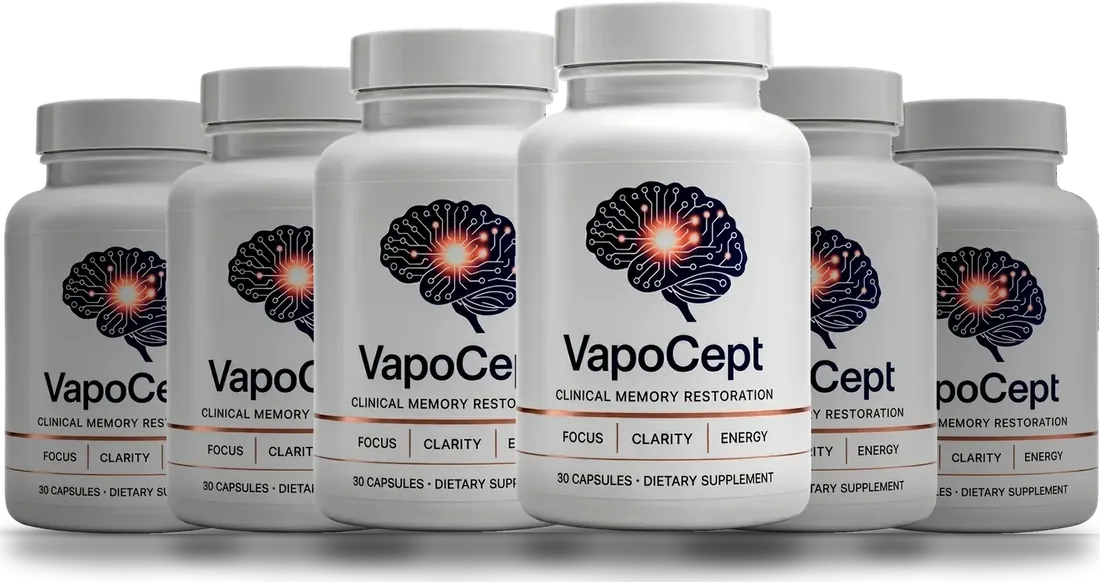
Order VapoCept from the authorized US retailer
30 capsules in every bottle, 1 capsule a day. 60-day money-back guarantee. The order desk, listed at the foot of the page, handles tracking and refunds.
Review record
The people behind this VapoCept page
- Writer
- VapoCept Editorial Desk
- Reviewer
- Dr. Patricia McKeon, neuropsychologist
- Last revised
The desk wrote this page for Vapozcept from the label, the published panel and public health sources, and Dr. Patricia McKeon reviewed it before it went live. It is general information for adults, not advice about your own health.
Worried about your memory or focus, or taking blood-pressure or heart medicine? See your doctor before you start VapoCept, and bring the bottle.