A familiar sports ingredient, at a small dose
The Tingling Most People Won't Feel: Beta-Alanine and Dose at 40 mg
Beta-alanine, familiar from pre-workout products, can cause a harmless skin tingling called paresthesia at higher single doses. Research studying that tingling and how fast the body absorbs beta-alanine used doses in the hundreds of milligrams to several grams. VapoCept lists 40 mg, well under the range tied to noticeable tingling, and far under the daily gram-level intake research says is needed to raise muscle carnosine over time, the slower process that actually does the work in muscle tissue.
What is paresthesia, and why does beta-alanine cause it?
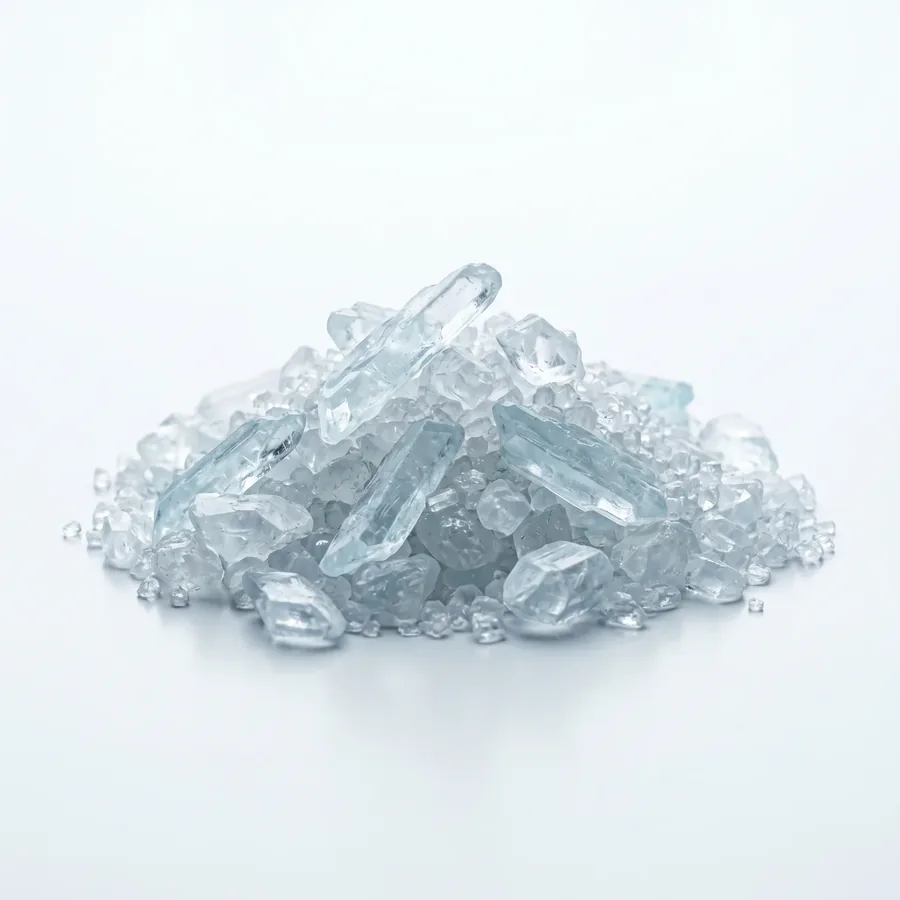
Paresthesia is the clinical name for a tingling, prickling, or itching sensation on the skin that is not caused by an outside touch. Most people know it from pre-workout supplements: a dose of beta-alanine, especially taken on an empty stomach as a single large serving, can bring on a tingling across the face, neck, and hands within about fifteen to twenty minutes, usually fading within an hour.
It is considered harmless and temporary. It is also the single most recognizable thing about beta-alanine as an ingredient, which makes it worth understanding exactly how VapoCept's printed 40 mg dose compares with the doses that research has actually linked to it.
What dose actually triggers the tingling?
A 2012 study published in Amino Acids, led by researchers who specifically set out to measure beta-alanine's absorption kinetics and its connection to paresthesia, compared standard immediate-release beta-alanine tablets with a slow-release formulation. The immediate-release tablets, at gram-level doses typical of sports products, produced a sharp rise in blood beta-alanine and a corresponding paresthesia response; the slow-release tablets blunted both the absorption spike and the tingling, without changing how much beta-alanine was ultimately absorbed (Décombaz et al., 2012). A companion paper by overlapping authors the same year reviewed dosing and delivery strategies for beta-alanine supplementation more broadly, reinforcing that it is the speed and size of a single dose, not beta-alanine as a substance, that drives the tingling (Stellingwerff et al., 2012).
The doses studied in this research, and in the sports-nutrition field generally, are measured in hundreds of milligrams to multiple grams per serving, consistent with the 4 to 6 grams per day, split into smaller servings, that the International Society of Sports Nutrition's position stand on beta-alanine describes for exercise performance. Single immediate-release doses in roughly the 800 mg to 1,000 mg range and above are the ones most consistently linked to a noticeable tingle in these studies.
Why 40 mg sits well under that range
| Context | Beta-alanine amount | What was measured |
|---|---|---|
| VapoCept, one capsule | 40 mg | Printed panel line |
| Single doses linked to noticeable tingling | Roughly 800 mg and up | Paresthesia (Décombaz et al., 2012) |
| Daily intake used to raise muscle carnosine | 4 to 6 g, split into servings | Carnosine loading over weeks (ISSN position stand) |
At 40 mg, VapoCept's capsule is roughly one twentieth of the smaller end of the single-dose range tied to tingling in the kinetics research above, and about one hundredth of the low end of the daily range used in exercise studies. On the published numbers, a noticeable paresthesia response from this capsule alone would be unusual.
That same math cuts the other way, too. The dose relationship that makes tingling unlikely at 40 mg is the same relationship that makes a measurable performance or muscle effect unlikely at 40 mg, which the next section covers.
What would it take for beta-alanine to do something here?
Beta-alanine's recognized role in the body is as the building block muscle cells use, together with the amino acid histidine, to make carnosine, a compound that helps buffer acid buildup during short, hard bursts of effort. Raising muscle carnosine is not something a single dose does. A controlled study measuring muscle carnosine directly found that it rose progressively over four to ten weeks of daily beta-alanine supplementation, using doses of 3.2 to 6.4 grams a day split across the day, with muscle carnosine levels still climbing at the ten-week mark (Harris et al., 2006).
A gram-level daily dose
The carnosine-loading research used 3.2 to 6.4 g a day, roughly 80 to 160 times VapoCept's 40 mg line.
Split across the day
Doses were divided into smaller servings, partly to manage the tingling that larger single doses can bring.
Sustained for weeks
Muscle carnosine rose gradually over four to ten weeks of continued daily dosing, not after one capsule.
None of this research measured memory, focus, or energy; it measured muscle carnosine and, in related sports-nutrition literature, short-burst exercise capacity. There is no published study connecting beta-alanine, at any dose, to the cognitive claims printed on VapoCept's front label.
Why carnosine, and not beta-alanine directly?
Beta-alanine itself is not the compound researchers believe does the buffering work in muscle; it is the raw material. Muscle cells combine beta-alanine with a second amino acid, histidine, using an enzyme called carnosine synthase, to build carnosine. Supplement research targets beta-alanine specifically, rather than histidine or carnosine itself, because beta-alanine is normally the harder-to-get, rate-limiting ingredient in that reaction; the body's diet and tissues typically have more histidine available than beta-alanine, so adding beta-alanine is the more effective lever for raising carnosine, according to the loading research cited above.
This two-step relationship, beta-alanine in, carnosine made gradually over time, is also why a single dose cannot be expected to do much. There is no step in this pathway where one capsule's worth of raw material produces an immediate, same-day change; the loading research measured carnosine rising slowly, week over week, which is a fundamentally different time course than a single dose having an acute effect the way, for example, caffeine does.
Doing the math on a per-kilogram basis
Gram-for-gram comparisons can understate how big a gap really is if two people of very different sizes are being compared, so it is worth redoing the numbers per kilogram of body weight rather than as flat totals.
| Basis | Amount | Per kg for a 70 kg adult |
|---|---|---|
| VapoCept, one capsule | 40 mg | About 0.57 mg/kg |
| ISSN exercise range, low end | 4,000 mg | About 57 mg/kg |
| ISSN exercise range, high end | 6,000 mg | About 86 mg/kg |
Even adjusted for body weight, the gap holds at roughly a hundredfold. This matters because some dose comparisons shrink once you correct for body size; a 150-pound adult and a 220-pound adult taking the same flat gram amount are, technically, at somewhat different per-kilogram doses. Here, the gap is so large to begin with that no realistic body-weight range closes it. A much larger adult taking VapoCept would still be receiving only a small fraction of a kilogram-adjusted research dose.
How sports formulas manage the tingling at higher doses
Because the ISSN's effective exercise range is high enough to reliably cause tingling in immediate-release form, sports-nutrition formulators who want to deliver a full research dose, something VapoCept's 40 mg capsule is not attempting to do, generally use one of two strategies the kinetics research above points to: splitting the daily total into several smaller servings across the day rather than one large dose, or using a slow-release tablet that spreads absorption out over a longer window. The 2012 study comparing release forms found slow-release tablets produced a flatter rise in blood beta-alanine and a correspondingly milder paresthesia response, without reducing how much beta-alanine was ultimately absorbed.
The biochemistry behind why carnosine buffers acid at all is also worth a plain sentence. Carnosine contains a chemical group, an imidazole ring, with a pKa close to the pH range muscle tissue reaches during hard anaerobic effort, which is why it is efficient at soaking up the hydrogen ions that build up as muscles work hard and produce lactate. That buffering action is carnosine's job, not beta-alanine's directly, which is the same two-step relationship described above: beta-alanine is the delivery vehicle, and carnosine, built gradually from it, is the molecule doing the work.
So why is it on the panel at all?
The vendor materials behind this page do not explain why 40 mg of beta-alanine specifically was chosen, or what role it is meant to play alongside the arginine and citrulline lines. Beta-alanine is a familiar, inexpensive, well-known ingredient in the sports and energy category it likely borrows formulation habits from, and its presence on a panel at a token dose is not unusual among multi-ingredient capsules.
If skin tingling after a supplement is something you have experienced before and want to avoid, VapoCept's 40 mg beta-alanine dose is not a likely source of it, based on the research measuring where that threshold actually sits. If you are looking for beta-alanine's studied exercise benefit, the gram-level, weeks-long protocol that research used is a different proposition than one 40 mg line inside a daily capsule. And if your interest in VapoCept is specifically the mental-clarity and energy claims on the front label, beta-alanine is not where to look for supporting evidence either way, since its own research base stays entirely within muscle physiology and exercise performance. As with the other secondary ingredients on this panel, the honest position is that beta-alanine is present, printed, and real, while the amount is simply too small to expect the effect its reputation is built on. That is a narrower, more useful claim than either "it works" or "it is pointless," and it is the claim the published numbers actually support, once you line the capsule's 40 mg up against the research doses, the single-dose paresthesia threshold, and the weeks-long loading protocol, that its reputation is borrowed from, rather than taking the ingredient name on the panel as proof of an effect this dose was never shown to produce.
Questions people ask about this
Will VapoCept's beta-alanine make my skin tingle?
It is unlikely. Research tying beta-alanine to a noticeable tingle used single doses of roughly 800 mg and above, about twenty times VapoCept's 40 mg line.
How much beta-alanine do studies use to raise muscle carnosine?
A controlled study found muscle carnosine rose over four to ten weeks using 3.2 to 6.4 g a day, split into smaller servings, 80 to 160 times VapoCept's 40 mg dose.
Does a slow-release formulation reduce the tingling?
Yes, in the specific study that compared formulations. Slow-release beta-alanine tablets blunted the absorption spike and the paresthesia response compared with immediate-release tablets at the same total dose.
Is beta-alanine's tingling dangerous?
No. It is considered a harmless, temporary sensation, and is the best-documented side effect associated with higher beta-alanine doses.
Does VapoCept's 40 mg of beta-alanine support memory or focus?
No published research connects beta-alanine, at any dose, to memory or focus. Its studied role is in muscle carnosine and short-burst exercise capacity.
Does adjusting for body weight change the comparison?
Not meaningfully. Even per kilogram of body weight, VapoCept's 40 mg capsule works out to roughly a hundredth of the low end of the exercise research range for a typical adult.
Sources for this page
- Décombaz J, Beaumont M, Vuichoud J, Bouisset F, Stellingwerff T. Effect of slow-release β-alanine tablets on absorption kinetics and paresthesia. Amino Acids. 2012 Jul;43(1):67-76. Source
- Stellingwerff T, Decombaz J, Harris RC, Boesch C. Optimizing human in vivo dosing and delivery of β-alanine supplements for muscle carnosine synthesis. Amino Acids. 2012 Jul;43(1):57-65. Source
- Harris RC, Tallon MJ, Dunnett M, Boobis L, Coakley J, Kim HJ, Fallowfield JL, Hill CA, Sale C, Wise JA. The absorption of orally supplied β-alanine and its effect on muscle carnosine synthesis in human vastus lateralis. Amino Acids. 2006 May;30(3):279-289. Source
- Trexler ET, Smith-Ryan AE, Stout JR, et al. International society of sports nutrition position stand: Beta-Alanine. J Int Soc Sports Nutr. 2015. Source
Keep reading
Ready when you are
Order VapoCept from the authorized US retailer
30 capsules in every bottle, 1 capsule a day. 60-day money-back guarantee. The order desk, listed at the foot of the page, handles tracking and refunds.
Review record
The people behind this VapoCept page
- Writer
- VapoCept Editorial Desk
- Reviewer
- Dr. Patricia McKeon, neuropsychologist
- Last revised
The desk wrote this page for Vapozcept from the label, the published panel and public health sources, and Dr. Patricia McKeon reviewed it before it went live. It is general information for adults, not advice about your own health.
Worried about your memory or focus, or taking blood-pressure or heart medicine? See your doctor before you start VapoCept, and bring the bottle.