The second line on the panel
Calcium Carbonate at 18 mg: Reading VapoCept's Smallest Printed Line
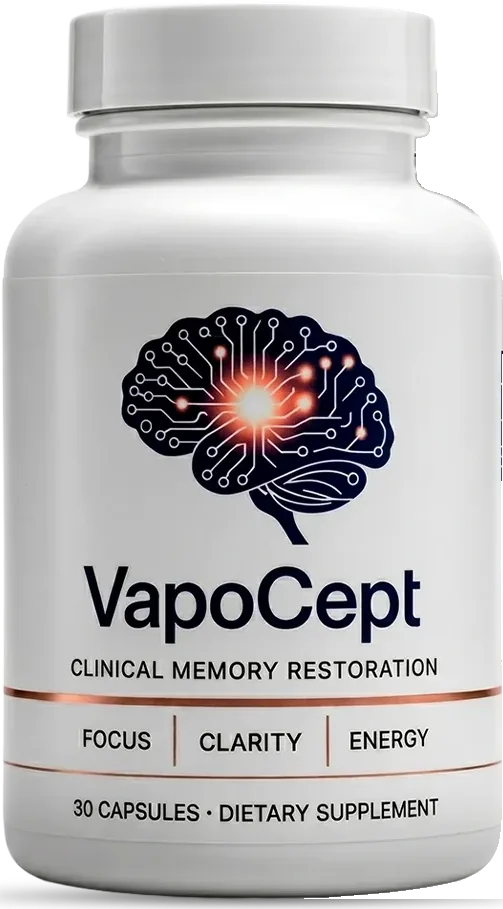
VapoCept's panel lists 18 mg of calcium, as calcium carbonate, which is about 2% of the 1,000 mg adults need daily. Calcium carbonate needs stomach acid to dissolve well, and calcium in general is known to interfere with some medicines, such as levothyroxine, when taken together. At 18 mg, VapoCept supplies far less calcium than the doses studied in those interactions, but the general timing advice still applies if you take an affected medicine.
Why does a focus capsule contain calcium at all?
VapoCept's panel names seven ingredients, and calcium is the only mineral on the list. The sales material does not explain why a capsule marketed around mental clarity and energy includes a bone-and-nerve mineral at a dose too small to meaningfully change your calcium intake. The vendor materials behind this page give an amount and a source form, calcium carbonate, but no stated purpose for including it.
One plausible, unconfirmed reason is formulation rather than dosing: calcium carbonate is a common, inexpensive flow agent and filler in capsule manufacturing, used in amounts far below a nutritional dose. We have not been given anything that confirms this is why it is here, so we say plainly that we do not know the manufacturer's reason, rather than guess at one.
What is calcium carbonate, and why does the form matter?
Calcium carbonate is the same chemical compound found in limestone and in antacid tablets. It is roughly 40% elemental calcium by weight, which is one reason it is a popular supplement source: a relatively small tablet weight delivers a comparatively large calcium number.
The catch is that calcium carbonate needs stomach acid to dissolve and release its calcium for absorption. That is why calcium carbonate supplements are typically recommended with food, when stomach acid production is higher. People who take acid-reducing medicines, such as proton pump inhibitors, can absorb calcium carbonate less efficiently than people with normal stomach acid, and may do better with a different calcium form, such as calcium citrate, which does not depend on stomach acid the same way. At VapoCept's 18 mg dose, this distinction has little practical consequence, since the total calcium involved is small either way, but it is part of reading the line accurately.
Calcium carbonate
About 40% elemental calcium by weight. Needs stomach acid to dissolve well; usually taken with food.
Calcium citrate
About 21% elemental calcium by weight. Absorbs without needing stomach acid; sometimes preferred for people on acid-reducing medicine. Not the form VapoCept lists.
How small is 18 mg, really?
Adults 19 to 70 need about 1,000 mg of calcium a day, per the NIH Office of Dietary Supplements. VapoCept's 18 mg is about 2% of that need.
| Source | Approximate calcium | Share of the 1,000 mg daily need |
|---|---|---|
| VapoCept, one capsule | 18 mg | About 2% |
| 8 oz glass of milk | About 300 mg | About 30% |
| Typical calcium supplement tablet | 500 to 600 mg | 50% to 60% |
| Daily need, adults 19 to 70 | 1,000 mg | 100% |
By comparison, the glass of water VapoCept's own label tells you to take the capsule with contributes no calcium at all, while an 8 oz glass of milk supplies roughly fifteen times more calcium than the capsule itself. If calcium intake is a concern for you, bone health in particular, VapoCept's 18 mg is not a meaningful lever either way; food, a dedicated calcium supplement, or your doctor's guidance will matter far more than this line on the panel.
Can 18 mg of calcium interact with medicine?
Calcium, as a mineral class, is well documented to interact with a handful of common medicines, most notably oral levothyroxine, the thyroid hormone replacement millions of people take daily, and certain antibiotics, including some tetracyclines and fluoroquinolones. The mechanism is usually binding in the gut: calcium can bind to the drug and reduce how much of it the body absorbs if both are taken at the same time.
A controlled study of this exact interaction gave healthy volunteers 1,200 mg of calcium carbonate together with their levothyroxine dose and found it significantly reduced levothyroxine absorption compared with taking the two apart (Singh, Weisler & Hershman, 2001). That study used 1,200 mg of calcium carbonate, sixty-six times more than VapoCept's 18 mg line, specifically to produce a measurable effect.
At 18 mg, VapoCept supplies a small fraction of the calcium dose shown to meaningfully interfere with levothyroxine absorption in that study, so a clinically significant interaction from this capsule alone looks unlikely on the published numbers. That said, the standard, blanket medical advice for anyone on levothyroxine, a tetracycline, or a fluoroquinolone is to separate any calcium-containing product from the dose by several hours, regardless of how small the calcium amount looks on paper. That advice exists because people combine multiple calcium sources across a day, food included, and because it costs nothing to keep the habit. If you take any of these medicines, mention VapoCept to your pharmacist and ask whether your usual spacing routine already covers it.
The binding mechanism behind these interactions is worth a plain explanation, since "the calcium binds the drug" can sound vague. Tetracycline-class antibiotics and calcium ions form an insoluble complex in the digestive tract called a chelate, which the gut absorbs far less efficiently than the free antibiotic molecule, so less of the drug reaches the bloodstream. The levothyroxine interaction works differently but to a similar practical effect: calcium carbonate appears to interfere with the acidic conditions levothyroxine needs to dissolve and be absorbed in the stomach and upper intestine. In both cases, the fix researchers and pharmacists recommend is the same: separate the two by several hours, rather than avoiding calcium altogether.
Does the daily calcium need change with age?
Yes, and this is useful context for judging how small 18 mg really is across a lifespan, not just for one adult age band. The NIH Office of Dietary Supplements lists calcium RDAs that step up and down by age and life stage: about 1,300 mg a day for teenagers 9 to 18, 1,000 mg for most adults 19 to 50, and 1,200 mg for women 51 and older and men 71 and older, reflecting the body's reduced ability to absorb and retain calcium later in life.
| Group | Daily calcium need | VapoCept's 18 mg as a share |
|---|---|---|
| Teens, 9 to 18 | 1,300 mg | About 1.4% |
| Adults, 19 to 50 | 1,000 mg | About 1.8% |
| Women 51+, men 71+ | 1,200 mg | About 1.5% |
Across every one of these life stages, within VapoCept's labeled audience of adults 18 and older, 18 mg lands in roughly the same small, low-single-digit percentage range. There is no age group for which this capsule functions as a meaningful calcium source, which is consistent with calcium's apparent role here as a minor, printed line rather than a nutritional strategy.
Is there an upper limit worth knowing too?
Calcium also has an upper limit, set because very high total intakes, generally from supplements rather than food, have been linked to issues such as kidney stones and reduced absorption of other minerals in some people. The NIH Office of Dietary Supplements lists the upper limit for most adults at 2,000 to 2,500 mg a day, depending on age, covering intake from food and supplements combined.
VapoCept's 18 mg is not a meaningful contributor toward that ceiling either. A person would need to combine dozens of sources at VapoCept's level, or more realistically, rely on standard calcium-rich foods and a dedicated calcium supplement, to approach the upper limit at all. The practical point of including the upper limit here is completeness, not a warning specific to this capsule: at 18 mg, VapoCept sits closer to irrelevant than risky on either end of the calcium range, and the number worth watching is whatever your separate calcium supplement or dairy intake adds up to across the rest of your day.
One more gap worth naming: calcium absorption in the body depends heavily on vitamin D, and VapoCept's panel does not list vitamin D at all. For someone deliberately building a bone-health routine, calcium without a paired vitamin D source, whether from sunlight, food, or a separate supplement, is an incomplete picture regardless of the milligram amount involved. That is one more reason to treat VapoCept's calcium line as incidental rather than as part of a deliberate nutrient strategy: a formula built around calcium and vitamin D together would very likely include both lines, and this one does not.
What does the panel leave out about this line?
The published panel names the source, calcium carbonate, and the amount, 18 mg. It does not print a %DV figure for calcium, and it does not say whether the calcium is coated, buffered, or combined with anything else that might change how it behaves. The Supplement Facts page lists this alongside the panel's other disclosed and undisclosed details.
None of these gaps change the core arithmetic: 18 mg is a small number next to a 1,000 mg daily target, and small numbers rarely move a medical interaction that was demonstrated at a dose dozens of times larger. The honest summary is that calcium is present, printed, and almost certainly incidental to any effect VapoCept is marketed to have, while the standard caution around calcium and specific medicines remains worth a two-minute conversation with your pharmacist if it applies to you. If your own bottle's back panel ever prints a different calcium figure or a vitamin D line this published panel does not show, treat the bottle in hand as the final word, and let the order desk know so the published panel here can be corrected.
Questions people ask about this
Why does a mental-clarity supplement contain calcium?
The published materials do not say. The amount, 18 mg, is too small to meaningfully change calcium intake, and no stated purpose for including it was provided to us.
Is 18 mg of calcium enough to matter for bone health?
No. It is about 2% of the 1,000 mg adults need daily. A glass of milk alone supplies roughly fifteen times more calcium than this capsule.
Can VapoCept's calcium interfere with my thyroid medicine?
A real interaction between calcium carbonate and levothyroxine is documented, but the study that demonstrated it used 1,200 mg of calcium, far more than VapoCept's 18 mg. Ask your pharmacist whether your usual spacing routine already covers a small amount like this.
Why is the calcium listed as calcium carbonate specifically?
Calcium carbonate is a common, calcium-dense supplement source that needs stomach acid to dissolve well. The panel names this form but does not explain why it was chosen over another form such as calcium citrate.
Does the panel say the %DV for calcium?
No. The published panel gives the source and the milligram amount but does not print a %DV figure for calcium.
Could 18 mg of calcium ever push me over the upper limit?
No. The adult upper limit is 2,000 to 2,500 mg a day from food and supplements combined. VapoCept's 18 mg is a negligible share of either the daily need or the upper limit.
Sources for this page
Keep reading
Ready when you are
Order VapoCept from the authorized US retailer
30 capsules in every bottle, 1 capsule a day. 60-day money-back guarantee. The order desk, listed at the foot of the page, handles tracking and refunds.
Review record
The people behind this VapoCept page
- Writer
- VapoCept Editorial Desk
- Reviewer
- Dr. Patricia McKeon, neuropsychologist
- Last revised
The desk wrote this page for Vapozcept from the label, the published panel and public health sources, and Dr. Patricia McKeon reviewed it before it went live. It is general information for adults, not advice about your own health.
Worried about your memory or focus, or taking blood-pressure or heart medicine? See your doctor before you start VapoCept, and bring the bottle.