Reading the first line on the panel
Niacin as NE, Not Plain Milligrams: What VapoCept's 7.5 mg Figure Means
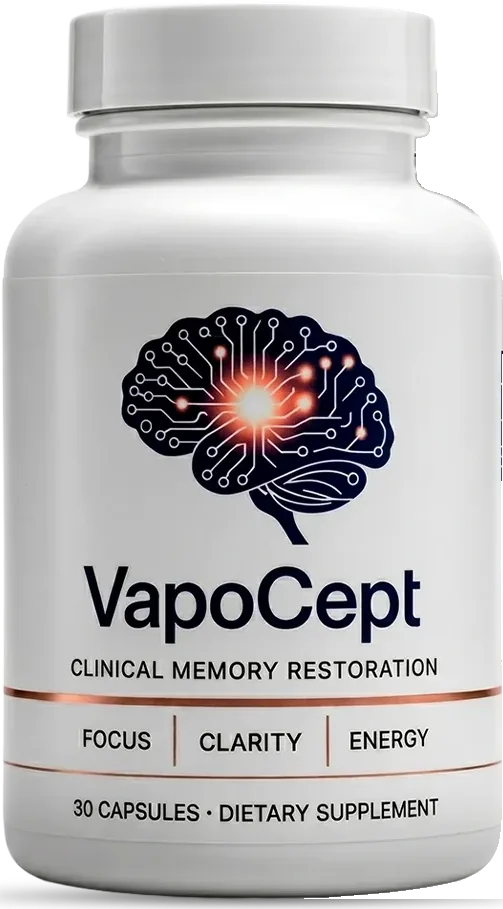
VapoCept's first panel line reads “Niacin 7.5 mg NE,” not plain milligrams. NE means niacin equivalents, the unit federal label rules require for this vitamin. At 7.5 mg NE, VapoCept supplies about 47% of the 16 mg NE an adult man needs daily, and it sits far below the levels tied to the classic niacin “flush.” The panel does not say which chemical form of niacin is used.
Why does the panel say NE instead of mg?
Because federal nutrition-labeling rules require it. Niacin is one of the few nutrients that United States supplement and food labels must declare in a converted unit rather than a straight weight of the ingredient itself. The unit is "NE," short for niacin equivalents, and it appears on the VapoCept panel as "Niacin 7.5 mg NE."
Most lines on the VapoCept panel are not converted this way. Calcium is listed as 18 mg of elemental calcium. The amino acids are listed as the milligram weight of the compound itself. Niacin is the outlier, and the reason has nothing to do with VapoCept specifically. It is a rule written into 21 CFR 101.9, the regulation that sets out how supplement and nutrition labels must express each nutrient.
That matters for a reader trying to compare VapoCept's panel with a bottle of plain niacin, a multivitamin, or a fortified cereal box. If every label uses NE correctly, the numbers are comparable. If a product mixes up the unit, or a shopper assumes "mg" and "mg NE" are interchangeable, the comparison breaks.
How is a niacin equivalent actually defined?
A niacin equivalent exists because the body can make its own niacin from a different nutrient: the amino acid tryptophan. Nutrition science has measured that conversion at roughly 60 mg of dietary tryptophan to 1 mg of niacin. The "equivalent" in niacin equivalents accounts for both direct niacin intake and this indirect, tryptophan-derived supply, so that a person's total niacin status can be expressed in one number.
In practice, when an ingredient list names a direct source of niacin, such as the "Niacin" line on the VapoCept panel, the NE figure is simply that ingredient's niacin content, expressed using the official unit the label rule requires. The 60-to-1 tryptophan conversion mostly matters when nutrition scientists total up niacin equivalents across an entire diet that includes protein foods, not when reading a single supplement line. For a shopper, the practical takeaway is narrower: read "mg NE" as the officially standardized niacin figure, not as a smaller or larger number hiding behind a technical label.
What NE is
The required label unit for niacin under 21 CFR 101.9, covering direct niacin plus what the body can convert from tryptophan.
What NE is not
It is not a different, larger or smaller version of the milligram weight of the niacin ingredient itself. On a supplement with a named niacin source, the NE figure and the ingredient's niacin content are the same number.
How much of the daily need does 7.5 mg NE cover?
Adult men need 16 mg NE a day and adult women need 14 mg NE a day, under the Recommended Dietary Allowances that the NIH Office of Dietary Supplements publishes for niacin. One VapoCept capsule's 7.5 mg NE works out to about 47% of the men's figure and about 54% of the women's figure.
| Figure | Amount | What it means for one capsule |
|---|---|---|
| VapoCept, one capsule | 7.5 mg NE | The printed panel line |
| Adult men, daily need | 16 mg NE | About 47% covered |
| Adult women, daily need | 14 mg NE | About 54% covered |
| Upper limit, supplements and fortified food | 35 mg NE | Capsule is about one fifth of the limit |
That leaves roughly half of a day's niacin need to come from food or another source. Niacin is common in meat, poultry, fish, peanuts, and fortified grain products, so most adults eating a varied diet are not relying on a capsule's 7.5 mg to get there. If you track niacin for a medical reason, 7.5 mg NE is the number to add to your running total, not a full day's supply on its own.
What is niacin flush, and could 7.5 mg cause it?
Niacin flush is a warm, reddening rush of the skin, most often on the face, neck, and chest, that some people feel after taking niacin. It is not dangerous for most healthy adults, but it can be uncomfortable, and it is the single best-known side effect of this vitamin.
At the cell level, flush is driven by a specific receptor. A 2005 study published in the Journal of Clinical Investigation identified GPR109A, also called HM74A, as the receptor that mediates nicotinic-acid-induced flushing, by showing that mice lacking the receptor no longer flushed in response to niacin while normal mice did (Benyó et al., 2005). When niacin binds this receptor on skin immune cells, it triggers the release of compounds that dilate small blood vessels, which is what a flush actually is.
The dose matters far more than the fact that an ingredient is "niacin" at all. The Institute of Medicine set niacin's upper limit for supplements and fortified foods at 35 mg NE a day specifically because flushing was the adverse effect used to set that ceiling: it is the dose researchers found some healthy adults begin to notice flushing from supplemental niacin, used as the safety trigger for the entire population. VapoCept's 7.5 mg NE is about one fifth of that 35 mg figure, and it is a small fraction of the 50 mg-and-up single doses more commonly associated with noticeable flushing, let alone the 500 mg to 2,000 mg daily doses used in the prescription, cholesterol-management era of niacin therapy. A reasonable reading of the published numbers is that flushing from VapoCept's 7.5 mg dose on its own would be unusual.
Does the chemical form of niacin matter?
Yes, and this is a second gap in the published panel. Vitamin B3 comes in more than one chemical form, and the two most common supplement forms do not behave identically at the flush receptor.
Nicotinic acid
The classic form, and the one most strongly linked to GPR109A activation and flushing, especially in immediate-release form.
Nicotinamide (niacinamide)
A different chemical form of vitamin B3 that does not activate the flush receptor the same way at typical doses, and is generally considered far less likely to cause flushing.
What the VapoCept panel says
Only "Niacin," with no form named. The vendor materials behind this page do not specify nicotinic acid versus nicotinamide, so we cannot tell you which one capsule contains.
This is consistent with how the rest of the published panel reads: amounts are printed, but some manufacturing detail, including the capsule's other ingredients and the exact chemical source for a couple of lines, is not. The Supplement Facts page lists everything the panel does and does not disclose in one place.
Does 7.5 mg NE stack with a multivitamin?
Yes, and the math is simple addition. If your multivitamin lists, say, 20 mg NE of niacin, adding VapoCept's 7.5 mg NE brings your supplement total to 27.5 mg NE a day, before food. That is still under the 35 mg upper limit for most adults, but it is worth doing the sum rather than assuming one capsule a day is too small to matter.
People who already take a separate B-complex or a niacin product on their doctor's advice, for cholesterol management or any other reason, should add VapoCept's 7.5 mg NE to that regimen's total and mention it at their next visit, rather than treating a dietary supplement capsule as something that sits outside the count.
Fortified foods complicate the running total further. A single serving of many fortified breakfast cereals lists niacin in the 20% to 25% Daily Value range, which, at the current 16 mg NE Daily Value, works out to roughly 3 to 4 mg NE from cereal alone, before any niacin naturally present in the milk, meat, fish, or grains in the rest of a day's meals. None of this makes VapoCept's 7.5 mg NE risky by itself. It does mean that "7.5 mg" is one line in a running total that most adults are already filling from ordinary food, and the only way to know your real total is to add the label numbers up rather than eyeball any single product in isolation.
Why the %DV reference itself changed
Readers comparing an older niacin product label with a newer one may notice the %DV math does not quite match between the two. That is not an error on either label. The FDA's 2016 final rule updating Nutrition Facts and Supplement Facts labels revised several Daily Values used to calculate %DV figures, including lowering niacin's reference value from 20 mg to 16 mg NE, to better align the label's %DV calculation with current RDA science. Manufacturers had a multi-year compliance window to adopt the updated figures.
VapoCept's own published panel does not print a %DV figure for niacin at all, so this detail does not change anything on the bottle itself. It is useful context if you are comparing VapoCept's 7.5 mg NE against an older supplement bottle's printed %DV, or against %DV figures quoted in older articles and forum posts, since the reference point behind that percentage may not be the same number across sources written at different times.
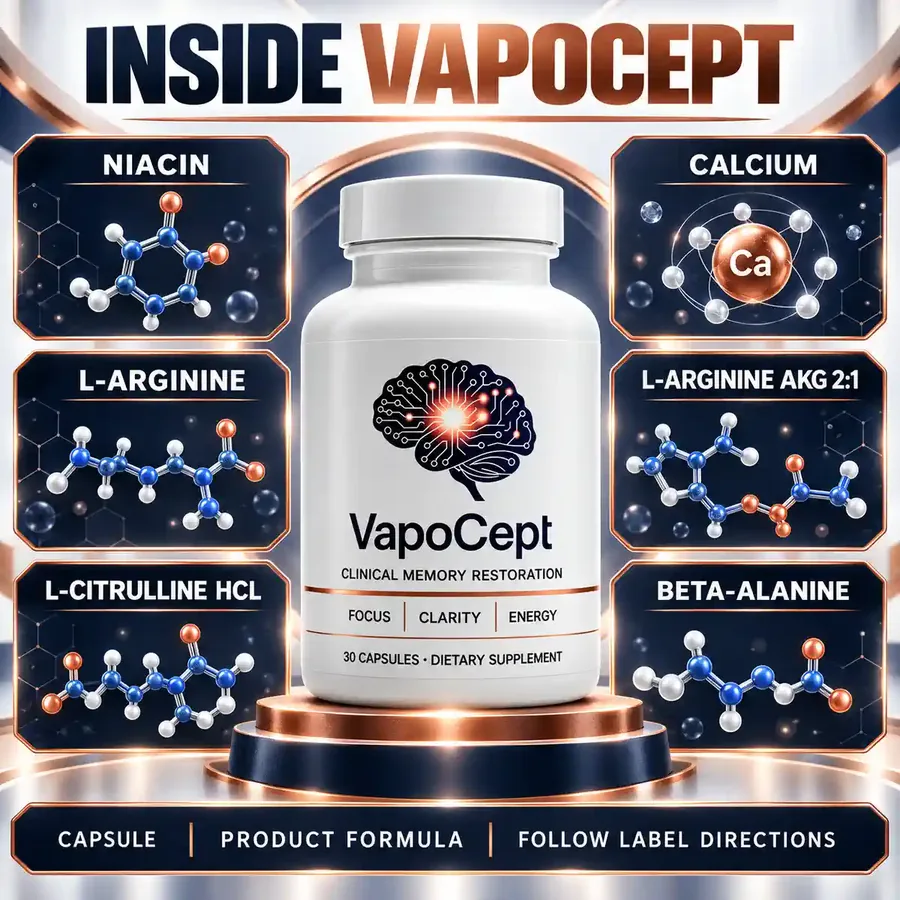
The bottom line for this ingredient is unglamorous but accurate. Niacin at 7.5 mg NE is a modest, well below-limit top-up to a nutrient most people already get from food, expressed in the unit the label is required to use, from a chemical form the brand has not named. For anything beyond that, including whether niacin fits your personal health picture, the conversation belongs with your doctor or pharmacist, especially if you already take a prescription niacin product.
Questions people ask about this
Is VapoCept's niacin the same as 7.5 mg of plain niacin?
For label purposes, yes. "Mg NE" is the required way to express niacin content, and on an ingredient list that names niacin directly, the NE figure is the ingredient's niacin content in the officially standardized unit.
Will 7.5 mg NE of niacin cause a flush?
It is unlikely on its own. The receptor behind niacin flush responds to dose, and 7.5 mg NE is a small fraction of the 35 mg upper limit set in part because of flushing, and well under the levels most often linked to a noticeable flush.
Does the panel say whether this is nicotinic acid or nicotinamide?
No. The published panel and the vendor materials behind this page name only "Niacin," without specifying the chemical form, so we cannot tell you which one is inside the capsule.
How much of my daily niacin need does one capsule cover?
About 47% of the 16 mg NE adult men need, and about 54% of the 14 mg NE adult women need, under NIH Office of Dietary Supplements figures.
Should I count VapoCept's niacin toward my multivitamin's total?
Yes. Add the 7.5 mg NE to whatever niacin amount your multivitamin or any other supplement lists, and mention the combined total to your doctor if you take a prescription niacin product.
Sources for this page
- Benyó Z, Gille A, Kero J, Csiky M, Suchánková MC, Nüsing RM, Moers A, Pfeffer K, Offermanns S. GPR109A (PUMA-G/HM74A) mediates nicotinic acid-induced flushing. J Clin Invest. 2005 Dec;115(12):3634-3640. Source
- NIH Office of Dietary Supplements. Niacin: Fact Sheet for Consumers. Source
- U.S. Food and Drug Administration. 21 CFR 101.9, Nutrition labeling of food (niacin expressed as niacin equivalents). Source
Keep reading
Ready when you are
Order VapoCept from the authorized US retailer
30 capsules in every bottle, 1 capsule a day. 60-day money-back guarantee. The order desk, listed at the foot of the page, handles tracking and refunds.
Review record
The people behind this VapoCept page
- Writer
- VapoCept Editorial Desk
- Reviewer
- Dr. Patricia McKeon, neuropsychologist
- Last revised
The desk wrote this page for Vapozcept from the label, the published panel and public health sources, and Dr. Patricia McKeon reviewed it before it went live. It is general information for adults, not advice about your own health.
Worried about your memory or focus, or taking blood-pressure or heart medicine? See your doctor before you start VapoCept, and bring the bottle.